
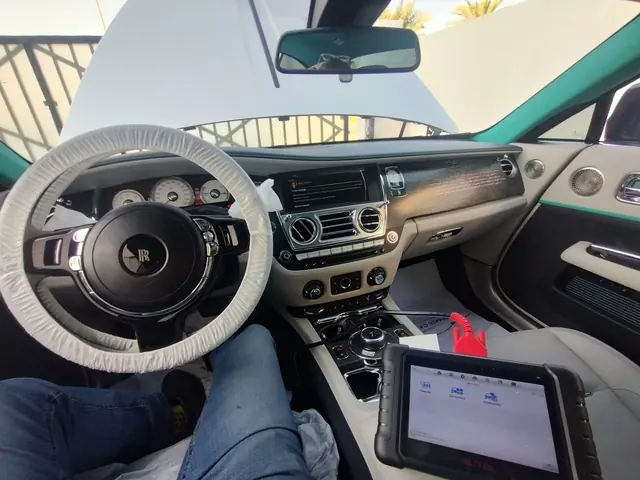
A warning light on the dashboard is your car telling you that one of its systems has noticed something outside normal limits. It is not telling you which part to replace. The difference between those two things is where a lot of money is wasted.
A fault code is a symptom, not a diagnosis
When a car’s control unit detects a problem, it stores a fault code. Plugging in a scanner and reading that code takes a minute, and many workshops stop there: the code mentions a sensor, so the sensor is replaced.
The trouble is that a code describes what the system saw, not why. A code for an oxygen sensor might be caused by the sensor, but it might also come from a vacuum leak, a wiring fault, an exhaust leak, low fuel pressure or a software issue. Replace the sensor without checking, and the light may go off for a while, then come back. You have paid for a part and the fault is still there.
What a proper diagnosis looks like
At Garage Lutis, we treat the code as the starting point:
- Listen first. When did the light come on? Is the car driving differently? Does it happen when the engine is cold, in traffic, or at speed? The pattern often narrows things down before any tool is connected.
- Read everything, not just one code. Modern cars have many control units. Related codes in other systems, along with the freeze-frame data showing conditions when the fault occurred, tell a fuller story.
- Check the history. The service record and any previous repairs can point straight to the cause, or rule things out.
- Test, don’t guess. We look at live data while the car runs, test circuits with a multimeter or oscilloscope, check connectors and wiring, and use the manufacturer’s test procedures where they exist.
- Confirm the cause before ordering parts. Only when the root cause is identified do we recommend a repair, and we explain what we found and why.
- Verify the fix. After the repair we clear the codes, drive the car, and check that the system reports normally.
Which lights need attention now
Not every light means stop immediately, but some do:
- Red lights, such as oil pressure, engine temperature, brake system or battery charging, mean stop as soon as it is safe and switch off. Driving on can cause serious damage.
- A flashing engine light usually means a misfire severe enough to damage the catalytic converter. Reduce speed and get it checked straight away.
- Amber lights, such as a steady engine light, tyre pressure, ABS or traction control, mean get it checked soon. The car is usually safe to drive carefully to the workshop.
If you are unsure, send us a photo of the dashboard on WhatsApp and we will tell you whether it is safe to drive in.
Intermittent faults
The hardest problems are the ones that come and go. They are often caused by a connector, a wiring fault that only shows when hot or under vibration, or a component starting to fail. They take patience: recording data on a drive, wiggle-testing harnesses, and sometimes keeping the car for a day to catch the fault happening. It is slower than swapping parts, but it is the only way to fix the problem once.
Why it matters for premium cars
On premium and modern cars, parts are expensive and systems are closely connected. A wrong diagnosis can mean replacing a control unit, an injector set or a sensor array that was never faulty. Spending time on diagnosis costs far less than buying the wrong parts.
Book a diagnosis
Send us your car’s make, model and year on WhatsApp, with a photo of the warning light and a short description of what the car is doing. We’ll tell you what we need to check and arrange a time.